Steel buyers often compare several suppliers before sending an enquiry. They want to know which products are available, what grades and sizes are offered, whether the supplier can meet their requirements and how to request a quotation. If a steel company's website does not answer these questions, potential buyers may contact another supplier. A well-planned business website helps steel suppliers present their products clearly and gives buyers the information they need before starting a conversation.
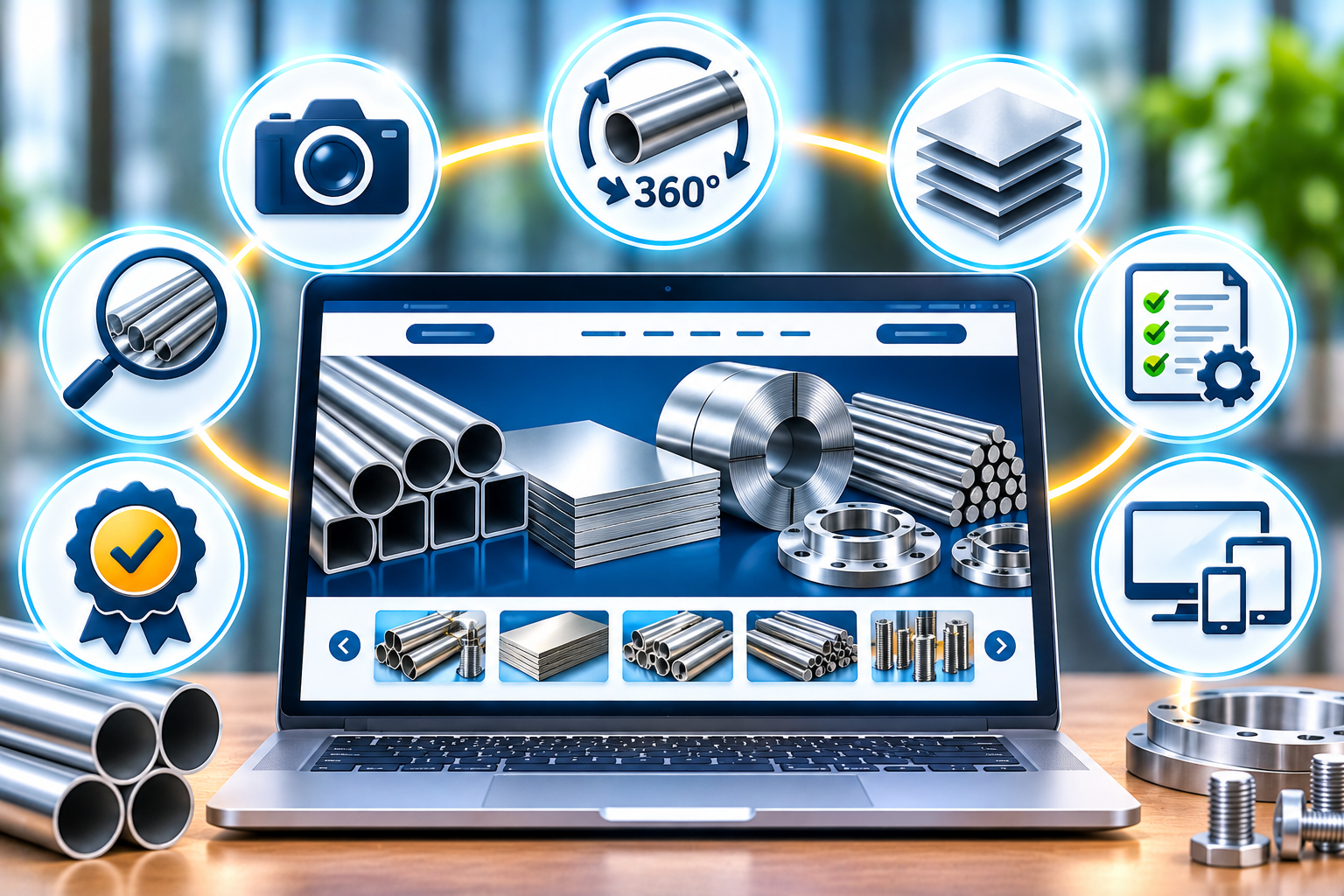
A useful steel website should begin with a clear introduction to the company and its products. Visitors should be able to understand whether the business supplies stainless steel, carbon steel, alloy steel or other materials. The homepage should also explain the company's main services, the industries it serves and how buyers can get in touch. Avoid filling the page with general statements. Specific information helps customers understand whether your business matches their requirements.
Product information deserves special attention. Steel buyers often search for particular product forms, grades, sizes and specifications. A supplier can create separate pages for products such as plates, sheets, pipes, tubes, bars, rods, billets and fittings, depending on the products actually offered. Each page should explain the available grades, dimensions, relevant standards and other confirmed details. This makes it easier for buyers to find the product they need without contacting the company for basic information.
Grade information is especially important in the steel industry. Different grades serve different purposes, and buyers may search using exact grade numbers or material specifications. A website should organise these details in a simple format. For example, a stainless steel supplier can create individual pages for grades such as 304, 304L, 316 and 316L, provided those grades are part of its actual supply range. Clear grade descriptions help buyers identify the right page and understand the information before requesting a quotation.
Product photographs also help buyers understand what a supplier offers. Use clear photographs of actual products, stock, facilities or packaging wherever available. Images should match the product described on the page. Add useful descriptions instead of uploading photographs without context. For technical products, a specification table can help visitors check important details quickly. Do not publish specifications unless the company can verify them.
A steel supplier's website should also make quotation requests simple. Buyers may need to share the product name, grade, size, quantity and delivery location. An enquiry form can collect these details and allow customers to attach drawings or requirement documents when needed. Keep the form easy to complete and provide a visible phone number and email address for buyers who prefer direct contact. A clear request-for-quotation option on product pages can help visitors take the next step.
Many steel buyers work with suppliers across different cities and countries. Your website should explain the locations you serve and provide accurate information about your supply capabilities. If your company handles domestic orders, exports or both, state this clearly. Mention packaging, inspection documents, material test certificates or shipping arrangements only when these are genuinely available. Buyers need accurate information to decide whether a supplier can meet their purchasing requirements.
A mobile-friendly website is equally important. Purchasing teams, engineers and business owners may check product details through their phones while travelling or working outside the office. Product descriptions, tables, photographs and enquiry forms should remain easy to read on smaller screens. Phone numbers and email links should also work correctly. A website that is difficult to use on a mobile phone can make it harder for buyers to contact your company.
Website speed should not be overlooked. Large product photographs, unnecessary animations and poorly managed website features can slow down important pages. Compress images without making them difficult to view, keep page layouts simple and check that product pages open properly. Buyers should not have to wait unnecessarily to view specifications or contact details.
Search visibility is another important part of presenting steel products online. Buyers may search for a product using its grade, form, size, application or supplier location. Your website should include useful pages that match these searches. Use clear page titles, descriptive headings, relevant product information and natural wording. Avoid repeating the same keywords across every page. Each product page should have its own purpose and provide information that genuinely helps buyers.
Your website content should also be organised so that search engines and AI systems can understand your business. Clear product names, accurate specifications, useful answers and well-structured information make it easier to identify what each page covers. This supports your wider SEO, Answer Engine Optimisation (AEO) and Generative Engine Optimisation (GEO) efforts. It does not guarantee a particular search position, but it gives search platforms clearer information about your products and services.
Trust matters when a buyer is considering a new steel supplier. Display the company's full name, address, phone number, email address and business details. You can also share genuine customer feedback, actual product photographs, company certifications and quality documents where applicable. Keep these details current. Avoid publishing claims about stock, delivery times, inspection facilities or certifications unless your business can support them.
A steel supplier should review its website regularly as products, grades, sizes and business requirements change. Update product pages when information changes, remove details that are no longer accurate and check that enquiry forms continue to work. Review common customer questions and add useful answers to the relevant pages. This helps the website remain useful to both new buyers and existing customers.
Conclusion
A good steel supplier website should help buyers understand the products, check relevant specifications and request quotations without confusion. Clear product pages, accurate grade details, useful photographs, mobile-friendly layouts and simple enquiry forms all contribute to a better buying experience. Pinacle Web India's Custom Website Designing Services help industrial businesses present their products and services through organised, customer-friendly websites. With useful content and a clear website structure, businesses can also build a stronger foundation for SEO, AEO and GEO, helping search engines and AI systems understand what they offer.
Frequently Asked Questions (FAQs)
1. What should a steel supplier include on a business website?
A steel supplier should include company information, product categories, available grades, sizes, specifications, product photographs, contact details and an easy way to request a quotation.
2. Why should steel suppliers create separate product pages?
Separate product pages help buyers find specific materials, grades and product forms. They also allow suppliers to provide relevant specifications and information for each product.
3. How can a steel supplier get more enquiries through its website?
Provide useful product information, display clear contact details and add quotation forms to relevant product pages. Make sure the website works properly on mobile phones.
4. Should steel companies display product grades and specifications online?
Yes, when the information is verified. Buyers often search for specific grades, dimensions and standards, so accurate details can help them decide whether to contact the supplier.
5. Is a mobile-friendly website important for steel manufacturers and suppliers?
Yes. Buyers may check product details and contact suppliers through smartphones. A mobile-friendly website makes it easier to read information and submit enquiries.
6. How can SEO help a steel supplier's website?
SEO helps product pages appear for relevant searches. Clear pages about grades, product forms, specifications and supply locations can help potential buyers find the business.
7. Can AI search platforms understand a steel supplier's website?
AI search platforms can use clearly written and organised website information to understand products and services. Accurate descriptions, clear page structure and useful answers support SEO, AEO and GEO efforts.
8. What type of website is suitable for a steel supplier?
A custom business website with organised product pages, specification details, enquiry forms and mobile-friendly layouts can suit a steel supplier. The structure should reflect the company's actual products and customer requirements.